
Does Your Boat Need A Bonding System?
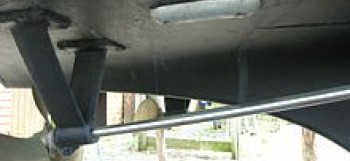
It’s not always possible to see what metal components of your boat are protected by Sacrificial Anodes. Cathodic protection is the system by which a sacrificial metal becomes the Anode which then loses electrons (corrodes) in preference to the other connected metals which become Cathodes.
When the anodes are connected to other metal components they are bonded. This creates a protected network of submerged metals which can be extended via connecting wires.
The goal of this “Bonding System” is for the connected anode(s) to protect the various submerged metal components regardless of the type of metal they are.
The Anode is usually made from Zinc or Aluminium for marine and brackish water or Magnesium for freshwater.
What about Props, Keels and Shafts?
It is often not possible to connect some of your valuable submerged metal to a bonding system. As a result the only way to protect them is by fitting them with their own designated anodes. These come in many shapes and sizes so are usually pretty easy to find one that suits. If these components are bonded to Hull Anodes via a bonding system the cable must be of low resistance. The protection offered will reduce with distance.
One issue of not being connected to the bonding system is that you will not be able to check the depletion of these anodes without inspection. The advantage of these components being connected to a bonding system is that you can measure the Potential using a Boat Meter and Silver Chloride Reference Electrode. Frequent measurements will then allow you to monitor anode depletion and set a number, when reached, indicating that anode replacement is due.
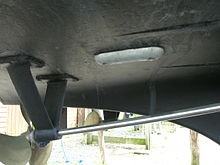
Corrosion caused by stray DC
Stray current corrosion usually occurs when your boat is in the marina and connected to shore power. The DC current can leak into the water in the marina or in the bilge water usually via a poor earth or a damaged wire or an exposed contact.
It is possible for a well-connected bonding system protect the vessel as it can provide a direct, low resistance path back to the battery rather than stray DC traveling through water.
In this instance there is a good chance of a fuse tripping thereby stopping the current flow.
When current flows through water, some metal will suffer catastrophic corrosion. Sacrificial Anodes are consumed first and should be replaced. The other underwater metals such as struts and through-hulls can suffer significant corrosion so note that stray DC corrosion cannot be prevented by the use of sacrificial anodes.